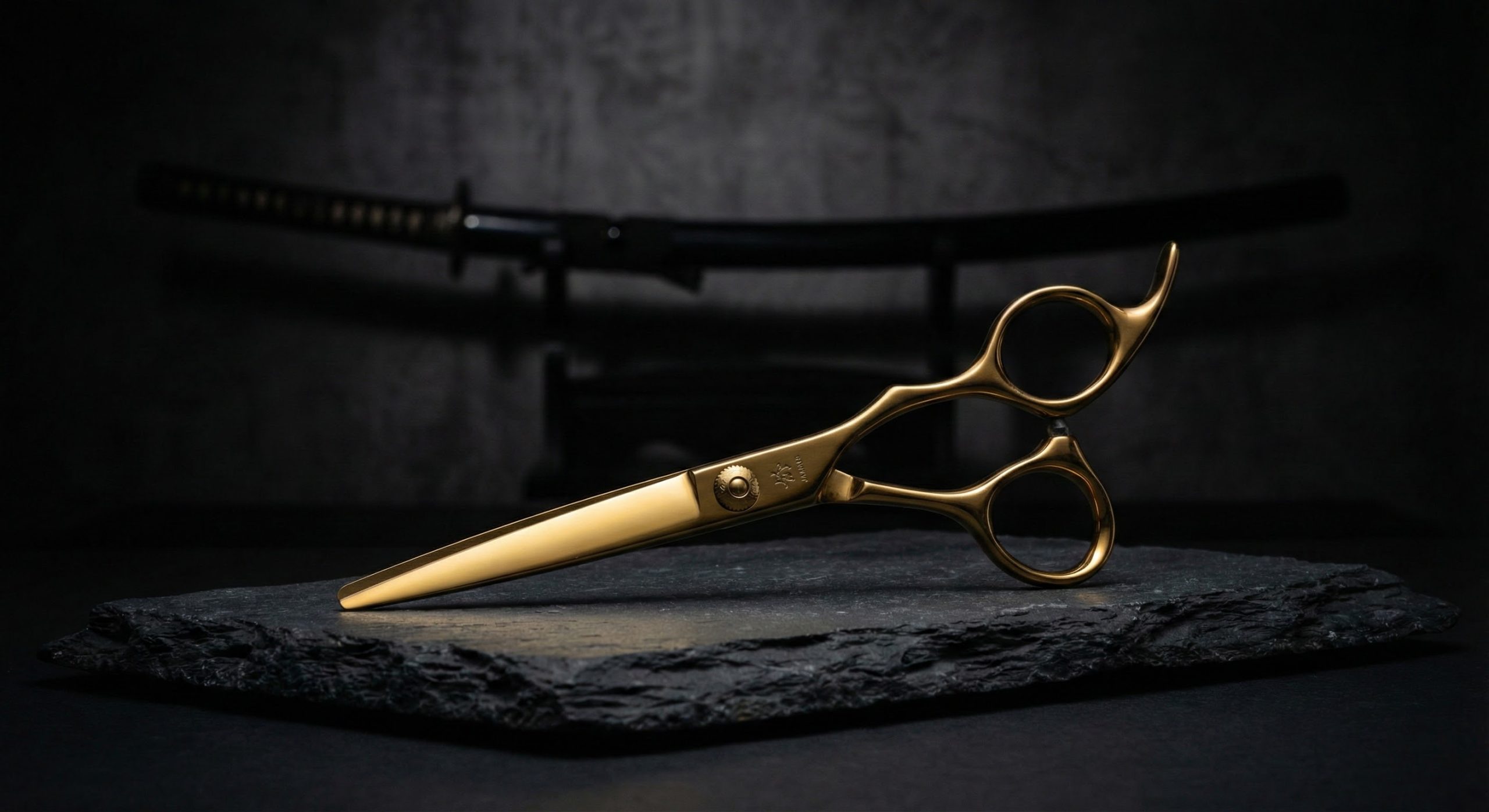
Japan is famous for its blades. Tourists flock to Kyoto and Sakai to buy hand-forged kitchen knives. We are a nation obsessed with sharpness, a legacy inherited from the Samurai sword (Katana).
But did you know that this obsession extends to the $5 scissors you use to open your Amazon packages?
In the West, scissors are often two flat pieces of metal stamped out of a sheet. They get dull, they get sticky from tape, and they hurt your hands.
In Japan, scissors are engineered instruments. We use physics (Bernoulli curves), high-tech coatings (Titanium), and 3D blade structures to ensure that every cut feels satisfying.
Here are 3 cutting tools that prove the Samurai spirit is alive on your desk.

Why Japan is Obsessed with “Sharpness”
To understand why a $5 pair of Japanese scissors is so good, we have to go back 800 years.
Japan has a unique history of forging steel. The legendary Katana (Samurai Sword) was not just a weapon; it was a spiritual object, believed to house the soul of the Samurai. Swordsmiths in cities like Seki (Gifu Prefecture) and Sakai (Osaka) spent centuries perfecting the art of layering hard steel over soft iron to create an edge that was impossibly sharp yet durable.
From War to Peace In 1876, the Japanese government issued the Haitōrei Edict, banning Samurai from carrying swords in public. Overnight, thousands of master swordsmiths lost their jobs. But they did not lose their skills.
Instead of making weapons for war, they turned their hammers to tools for peace:
- Kitchen Knives (Hocho) for chefs.
- Razors for barbers.
- Scissors and Cutters for tailors and students.
Today, the modern engineers at companies like PLUS and KOKUYO are the spiritual descendants of those swordsmiths. They apply the same obsession with metallurgy, angles, and durability to the stationery on your desk.
When you use a Japanese cutting tool, you are not just cutting paper. You are holding a piece of history.
1. The Physics Master: PLUS Fit Cut Curve
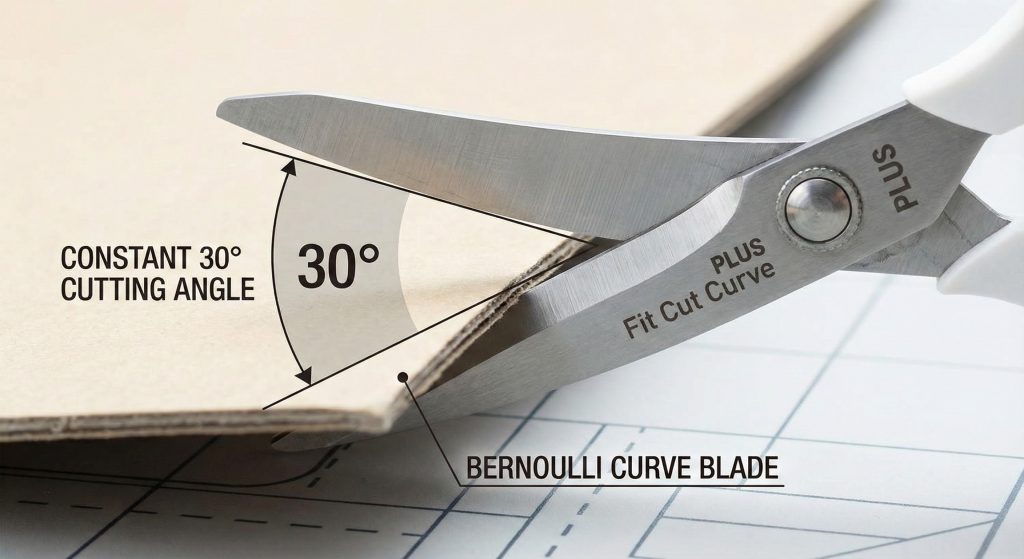
The Secret: The Bernoulli Curve.
Look at the blades of a normal pair of scissors. They are straight. Now look at the PLUS Fit Cut Curve. The blades are curved like a bow.
This is not for style. This is pure physics. By curving the blade, the cutting angle is kept constantly at 30 degrees, no matter where you are cutting.
Why you need it: Have you ever tried to cut thick cardboard, and the scissors got stuck near the tip? That never happens with these. It amplifies your hand strength by 3 times. You can cut through cardboard, plastic packaging, and even milk cartons with the same light force as cutting a tissue.
👉 Check out PLUS Fit Cut Curve on Amazon
2. The Glue Fighter: Kokuyo Saxa (Titanium Glueless)
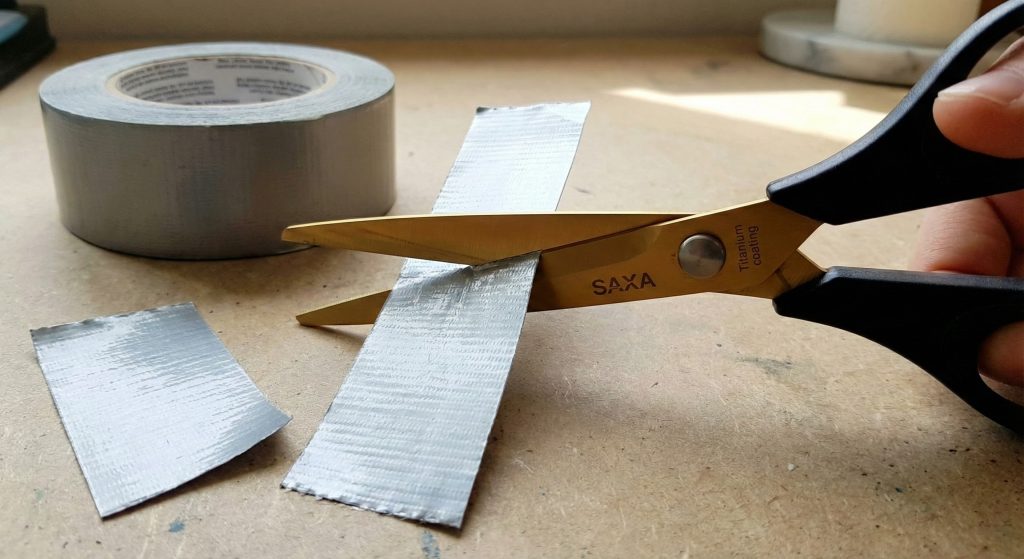
The Secret: 3D Structure & Titanium.
The enemy of all scissors is Tape. When you cut duct tape or packing tape, the adhesive sticks to the blades. After a few cuts, the scissors become useless goo.
The Kokuyo Saxa solves this with a “Hybrid Arch Blade” and a special 3D structure that minimizes the contact area between the blade and the tape. Plus, the premium models are coated in Titanium, making them 1,000,000 times (okay, maybe just 100 times) harder and resistant to rust.
👉 Check out Kokuyo Saxa on Amazon
3. The Unboxing Specialist: Canary Cardboard Cutter (“Dan-Chan”)
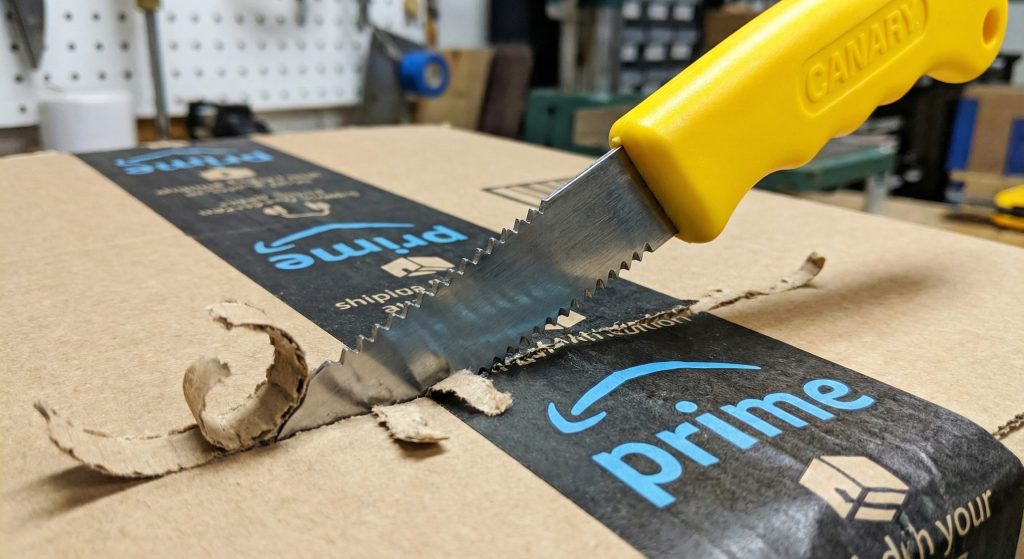
The Secret: Safety Serration.
We all live in the age of Amazon. We open boxes every week. Do you use your keys? A dangerous kitchen knife?
Japan invented a specific tool just for this: The Canary Cardboard Cutter (affectionately called “Dan-Chan”). It looks like a small saw. The serrated edge grips the cardboard and slices it open smoothly, but—and here is the magic—it is surprisingly safe to touch.
Why you need it: It makes breaking down recycling boxes fun instead of a chore. It handles curves easily, so you can even use it for cardboard crafts with your kids.
👉 Check out Canary Cutter on Amazon
Conclusion: A Souvenir You Can Use Every Day
You can’t easily carry a Samurai sword in your luggage. But you can carry these tools. They are cheap, durable, and bring a tiny moment of “Sharpness” joy to your daily life.
Are you tired of dull scissors? Which of these would upgrade your desk?



コメント