You have the perfect paper (Tomoe River). You have a great fountain pen (Pilot Metropolitan). Now, are you going to fill it with boring, standard black ink?
Please, don’t.
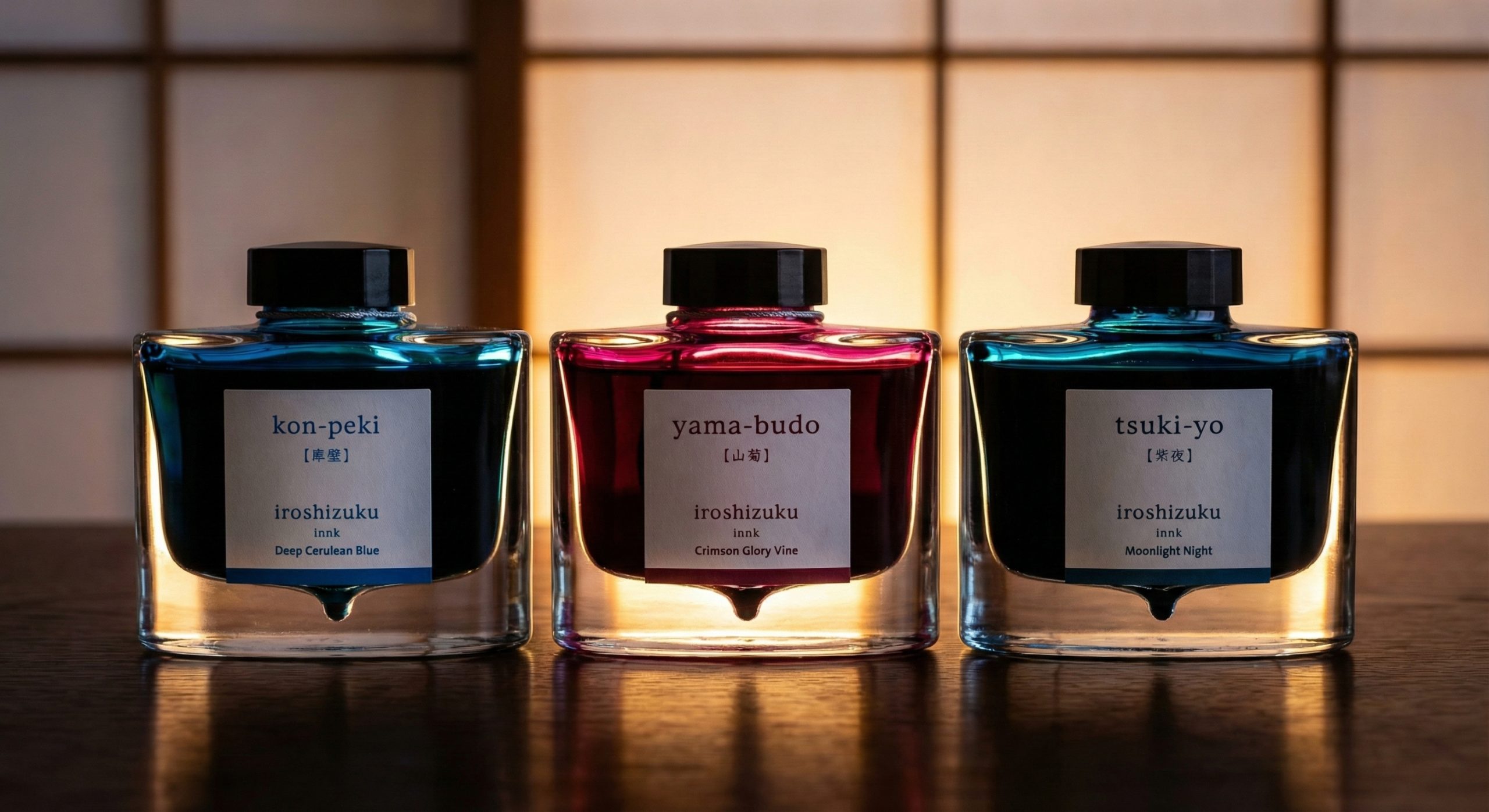
In Japan, we believe that words have temperature and emotion. Pilot created a line of inks called “Iroshizuku” (Color Droplets) to capture the changing colors of the Japanese landscape.
Each bottle is not just a color; it is a poem. It represents a specific moment in nature—the moonlight reflecting on the ocean, the wild grapes of autumn, or the deep blue sky of summer.
Here is why these “Liquid Gems” are the final piece of the puzzle for your writing experience.

1. The Global Bestseller: Kon-peki (Deep Cerulean Blue)
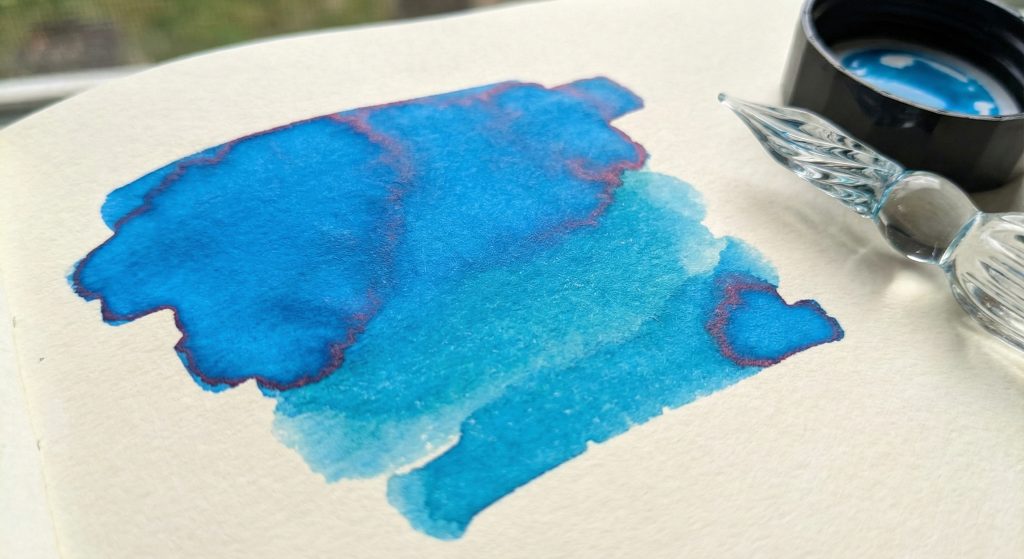
The Meaning: “Deep Azure Sky.”
If you ask any fountain pen lover, “What is the one ink I must buy?”, 90% will say Kon-peki. It is the color of the Japanese summer sky—bright, vivid, and full of energy.
It is not a serious “business blue.” It is a blue that makes you want to write more. It has beautiful shading (where the ink pools, creating light and dark variations in your handwriting), making your letters look 3D.
👉 Check out Kon-peki on Amazon
2. The Night Reflection: Tsuki-yo (Moonlight)
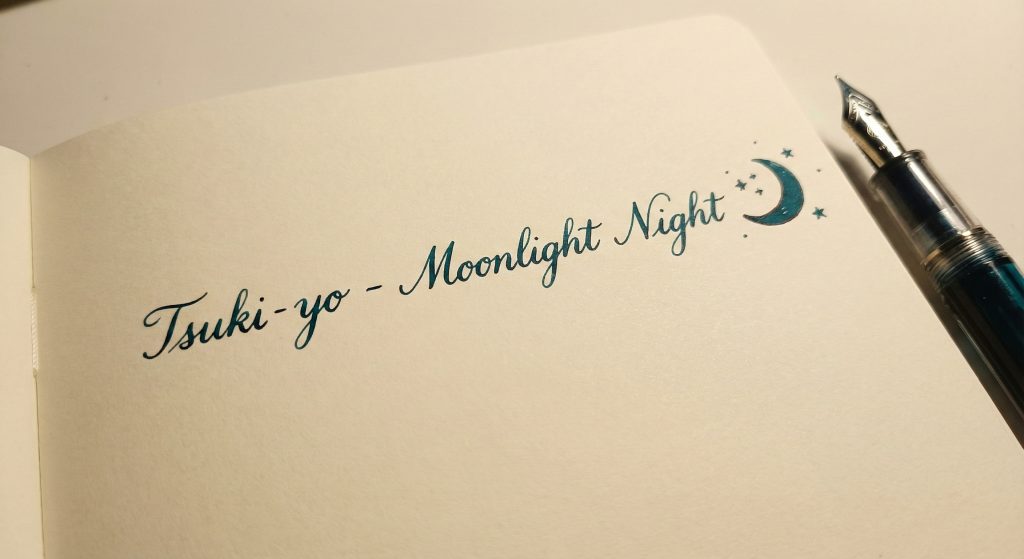
The Meaning: “Moonlit Night.”
This is the color of sophistication. It isn’t blue, and it isn’t black. It is a dark teal—the color of the night sky reflecting on the surface of a pond.
When you write with it, it looks professional enough for the office, but if you tilt the paper under the light, you might see a faint red sheen on the edges of the letters. It is a secret detail just for you.
👉 Check out Tsuki-yo on Amazon
3. The Autumn Magic: Yama-budo (Crimson Glory Vine)
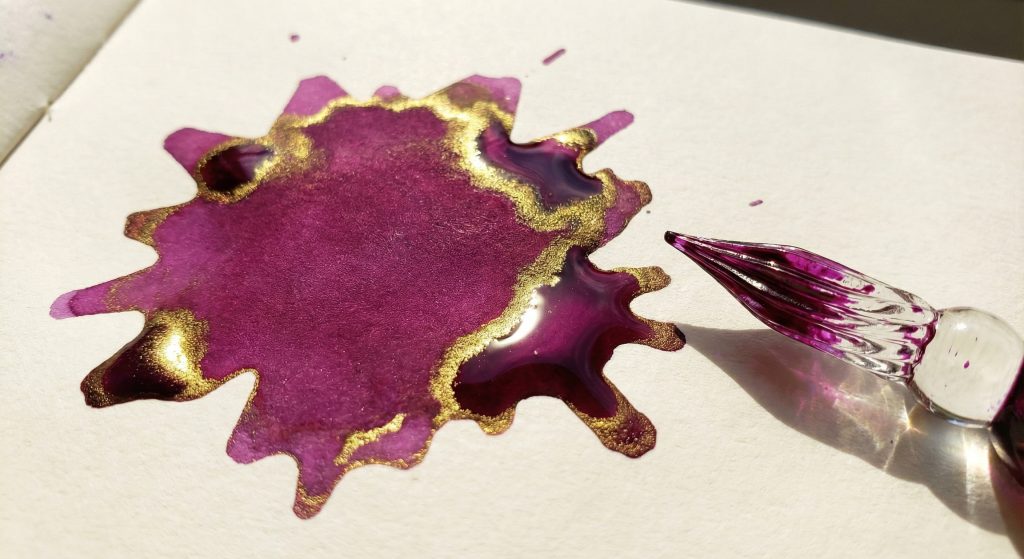
The Meaning: “Wild Grapes.”
This ink is famous for its “Sheen.” The base color is a rich, juicy magenta, like crushed grapes. But on high-quality paper like Tomoe River, the ink pools and dries to reveal a bright gold metallic shine.
It feels like magic. You are writing in purple, but the dried letters sparkle in gold. It is perfect for journals, love letters, or anytime you want to feel artistic.
👉 Check out Yama-budo on Amazon
The Bottle: A Masterpiece of Engineering
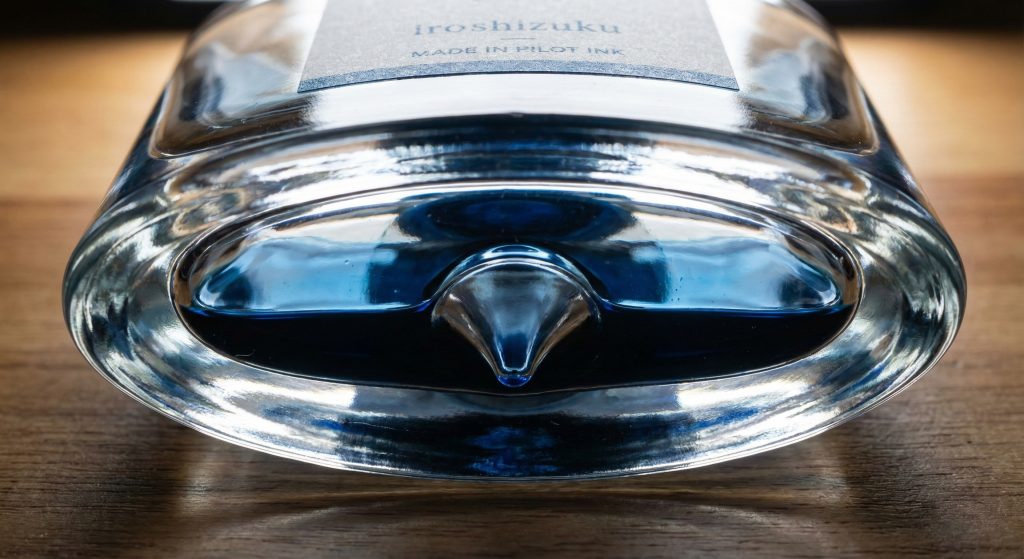
Even the bottle is legendary. Most ink bottles are functional and ugly. The Iroshizuku bottle looks like luxury perfume. It is made of heavy, hand-blown glass with a silver string tie.
But look at the bottom. There is a small cone-shaped dip in the center of the glass.
Conclusion: Paint Your Words
Writing doesn’t have to be a chore. With a $5 Preppy pen and a bottle of Tsuki-yo, writing a grocery list becomes a moment of Zen.
These bottles are heavy, so they are hard to carry home in a suitcase. Ordering them online is often the safest way to get these gems onto your desk.
Which season do you want to write with? Summer Sky (Kon-peki) or Moonlit Night (Tsuki-yo)?




コメント